
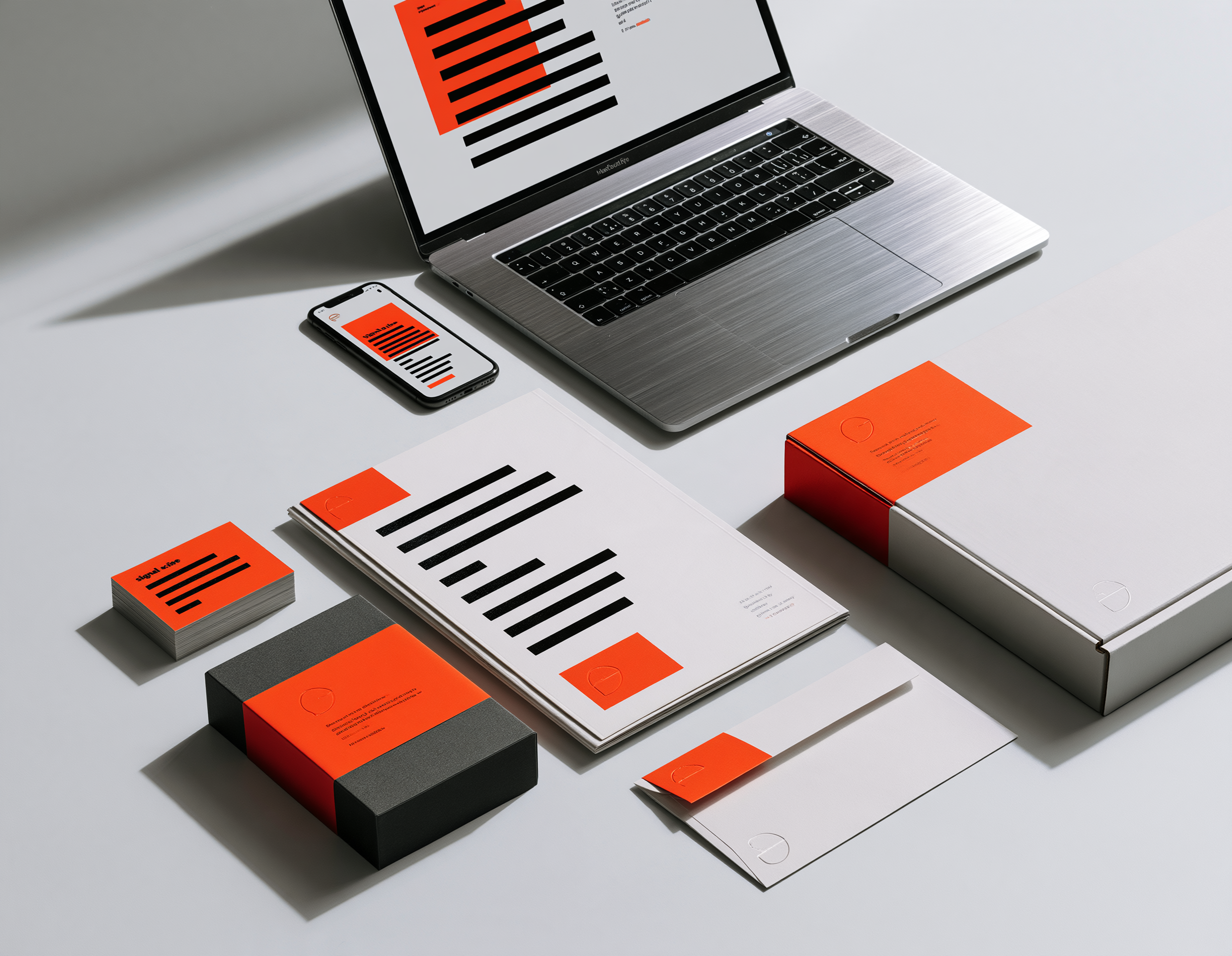
A strong identity holds together wherever customers encounter it.
A brand presentation is a controlled environment.
The headlines are the right length. The images work beautifully together. Every layout has room to breathe.
Then the identity enters everyday business.
A sales presentation needs a dense comparison table. A website needs an error message. A campaign needs to work in a narrow mobile format. A regional team needs more space for translated copy.
Suddenly, the question is no longer whether the brand looks good.
It is whether the brand works.
Recognition should survive a change of context
Your website, social content, product interface, and sales materials have different jobs. They should not need identical layouts to feel connected.
A useful way to think about brand identity is as a recognizable language rather than a fixed composition.
The language remains familiar, but it can say different things.
This is where living brand systems become relevant. Instead of relying solely on examples in a guidelines document, organizations can connect identity decisions to reusable tools and digital foundations. Design tokens—structured representations of design values—are one technology intended to help share a visual language across design tools, codebases, and platforms.
The business value is not the technical terminology. It is the possibility of making the brand easier to apply coherently.
Consistency should not mean repetition
There are two unhelpful extremes.
At one end, every piece of communication uses the same arrangement, regardless of its purpose. The brand stays orderly but becomes restrictive.
At the other, every new requirement becomes an exception. Individual pieces may look appealing, but the overall identity begins to drift.
The better ambition is a brand with a clear center and enough range to respond to real situations.
That means knowing which qualities make the business recognizable—and which aspects can change without weakening that recognition.
Your everyday materials reveal the strength of the identity
The most revealing brand test may not be the homepage or launch campaign.
It may be the proposal someone must finish this afternoon. The email announcing a service change. The presentation created by a team that was not involved in the rebrand.
These are useful places to ask:
- Does the identity support the information, or fight it?
- Do different materials feel related without looking interchangeable?
- Can the brand accommodate something unexpected?
- Does the result still feel like your business?
A beautiful launch is valuable. An identity that remains useful after launch is a different level of investment.
Stone’s branding and design services help businesses develop identities with both a clear point of view and room to grow—so the brand works beyond the presentation.